AIOS, an operating system for the business
A single assistant that knows the business, works inside its real accounts and tools, and handles the operational load that never reaches anyone's job description.
- Industry
- Professional services
- Region
- Remote
- Services
- Custom AI agents, Strategy & analytics
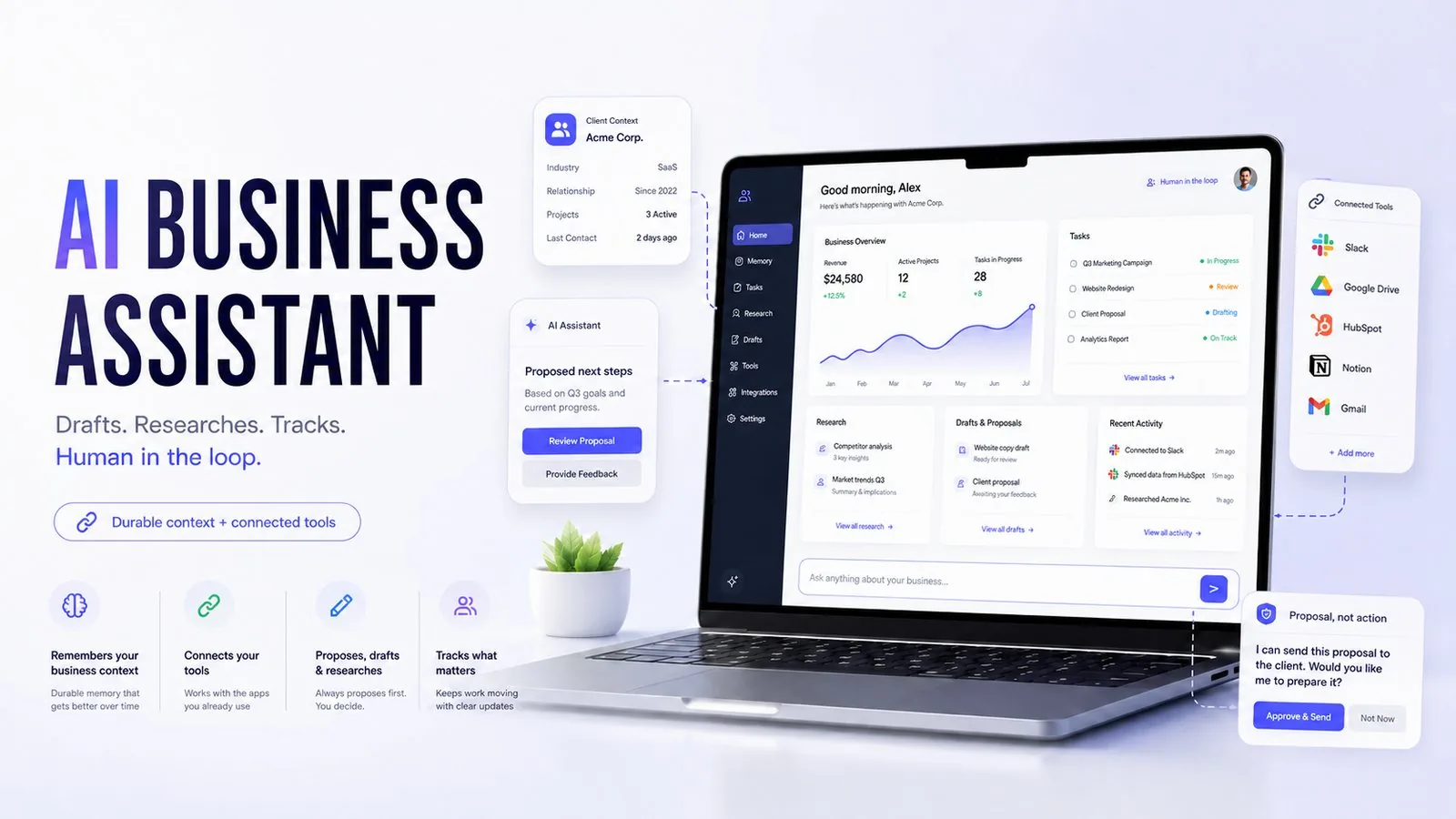
Every business accumulates work that is essential, endlessly repeated, and too varied to hand to software: the inbox, the follow-ups, the document due before Thursday, the research nobody has time to do properly. It never justifies a hire and never reaches a roadmap, but it consumes the attention of the people who should be doing something else. Generic AI tools do not solve it, because they start every conversation knowing nothing about the business and cannot touch any of its systems.
Communications
Reads and triages the inbox, drafts replies in the owner's own voice, prepares outreach, schedules meetings and manages the calendar.
Documents and deliverables
Produces client proposals, reports, briefs and presentations to a house standard, and builds the spreadsheets behind them.
Research and analysis
Investigates companies, markets and competitors properly rather than superficially, and returns a position with the reasoning attached.
Data work
Queries datasets far past what a spreadsheet can hold, cleans and de-duplicates them, and turns them into a list a person can actually work from.
Building
When something needs a tool that does not exist, it writes it, tests it, and keeps it. The system gets more capable the longer it runs.
Institutional memory
Remembers decisions, client history and standing preferences across every session, so nothing has to be re-explained.
The architecture separates thinking from doing. The AI decides what should happen; deterministic code carries it out. If a system is 90% accurate at each step, a five-step task succeeds barely more than half the time. Pushing execution into tested code removes that compounding failure and leaves the AI doing what it is genuinely good at.
Owner-led businesses and small senior teams carrying more operational load than headcount, and professional services firms where fee-earners spend a significant share of the week on necessary but unbillable work.
Want one of these for your business?
Book a call